
Book Description
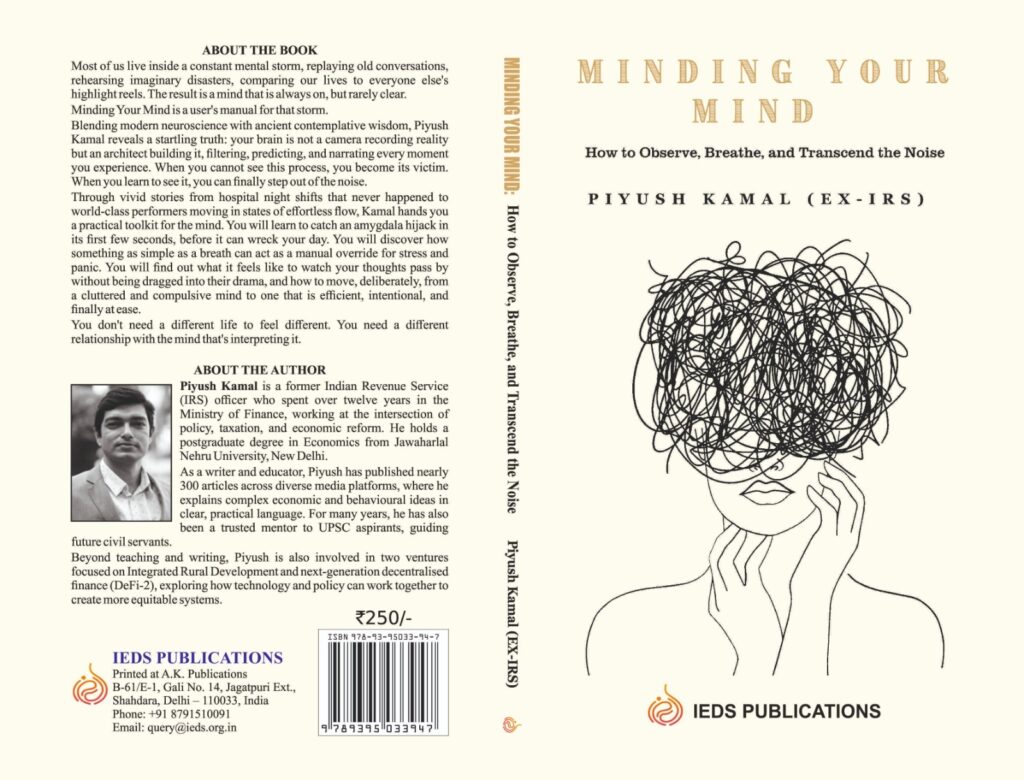
- Minding Your Mind: How to Observe, Breathe, and Transcend the Noise by Piyush Kamal (Ex-IRS) | IEDS Publications | First Edition, 2026
Most of what we think, want, and chase is not entirely our own; it is shaped by the desires, comparisons, and expectations of the world around us. Minding Your Mind explores this quiet truth at the heart of modern restlessness, drawing on insights from mimetic theory and neuroscience to show how the mind, left unchecked, can become a source of constant noise rather than clarity.
Moving through three stages, Understanding, Awareness, and Stillness, the book offers a practical path to recognize borrowed desires, observe thought patterns without judgment, and use breath and attention as anchors for a calmer, more intentional mind. Written in accessible language and grounded in everyday examples, it is a guide for anyone seeking to move from being driven by their thoughts to using the mind as a steady, reliable tool for living well.
Book Description
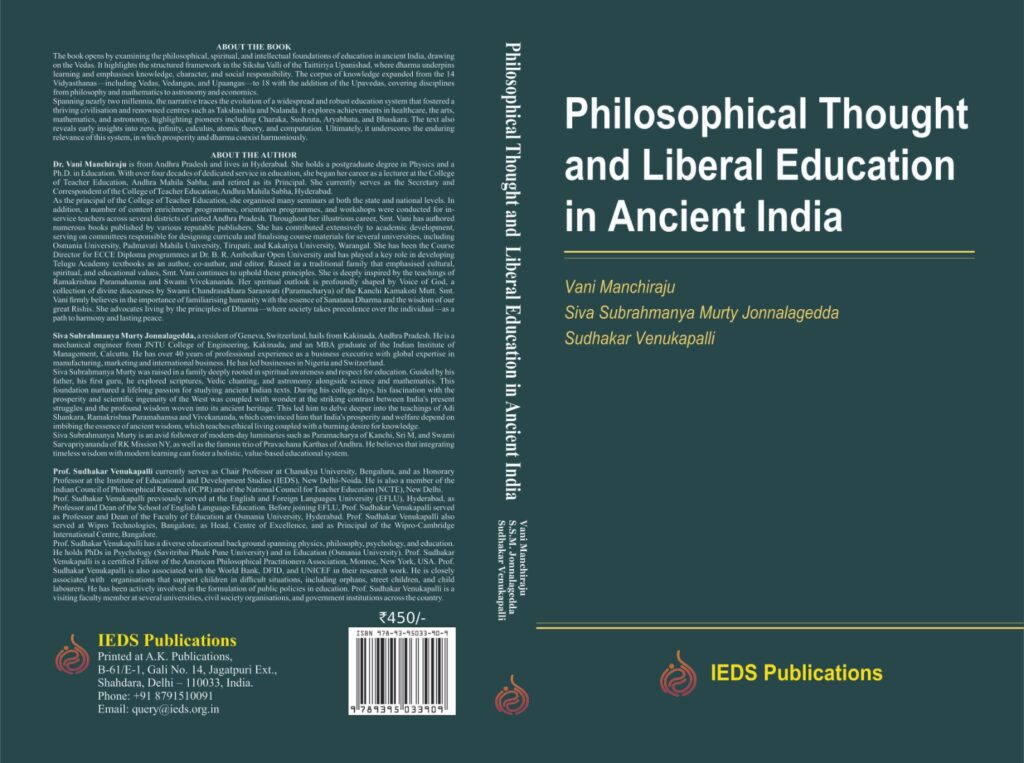
- Philosophical Thought and Liberal Education in Ancient India by Vani Manchiraju, Siva Subrahmanya Murty Jonnalagedda, and Sudhakar Venukapalli | IEDS Publications | First Edition, 2026
This book traces the philosophical and institutional foundations of education in ancient India, beginning with the Siksha Valli of the Taittiriya Upanishad and its vision of learning as the formation of the whole human being, physical, mental, and spiritual. It examines the Chaturdasa and Ashtadasha Vidyasthanams, the fourteen and eighteen traditional fields of knowledge spanning grammar, logic, astronomy, mathematics, medicine, and statecraft, and follows the evolution of India’s education system over nearly two millennia, including the rise of renowned centres of learning such as Takshashila, Nalanda, and Vallabhi.
Drawing on the contributions of figures like Aryabhata, Charaka, Sushruta, and Panini, the book situates India’s intellectual achievements, from the concept of zero to early ideas in astronomy and mathematics, within the educational culture that produced them. Combining scholarly depth with accessible writing, it offers students, educators, and policymakers a grounded resource for engaging with India’s classical knowledge traditions in the context of the National Education Policy 2020.by